Best Cloud Hosting for WordPress in 2025: A Complete Guide
Your WordPress site deserves exceptional performance. Traditional hosting can't always keep pace with modern demands and growing traffic expectations.
Hasan Wazid

Overview: The Future of WordPress Performance Welcome to your 2026 guide to exceptional WordPress performance! Speed and reliability determine your website's success fundamentally. A slow, unresponsive site turns visitor...
Too long? Ask AI to summarize
Get a quick summary of this article using your favorite AI assistant
Overview: The Future of WordPress Performance
Welcome to your 2026 guide to exceptional WordPress performance! Speed and reliability determine your website's success fundamentally. A slow, unresponsive site turns visitors away within seconds. Your reputation suffers alongside your search engine rankings. Moving into 2026, website demands grow exponentially higher. The secret weapon for top-tier performance is modern infrastructure.
WordPress has powered a huge portion of the web for years. Personal blogs to massive e-commerce empires rely on this platform. The foundation your site builds upon matters immensely. Traditional shared servers provide a decent starting point initially. They often struggle keeping pace with growing traffic volumes. Modern infrastructure offers a powerful, flexible, incredibly fast alternative.
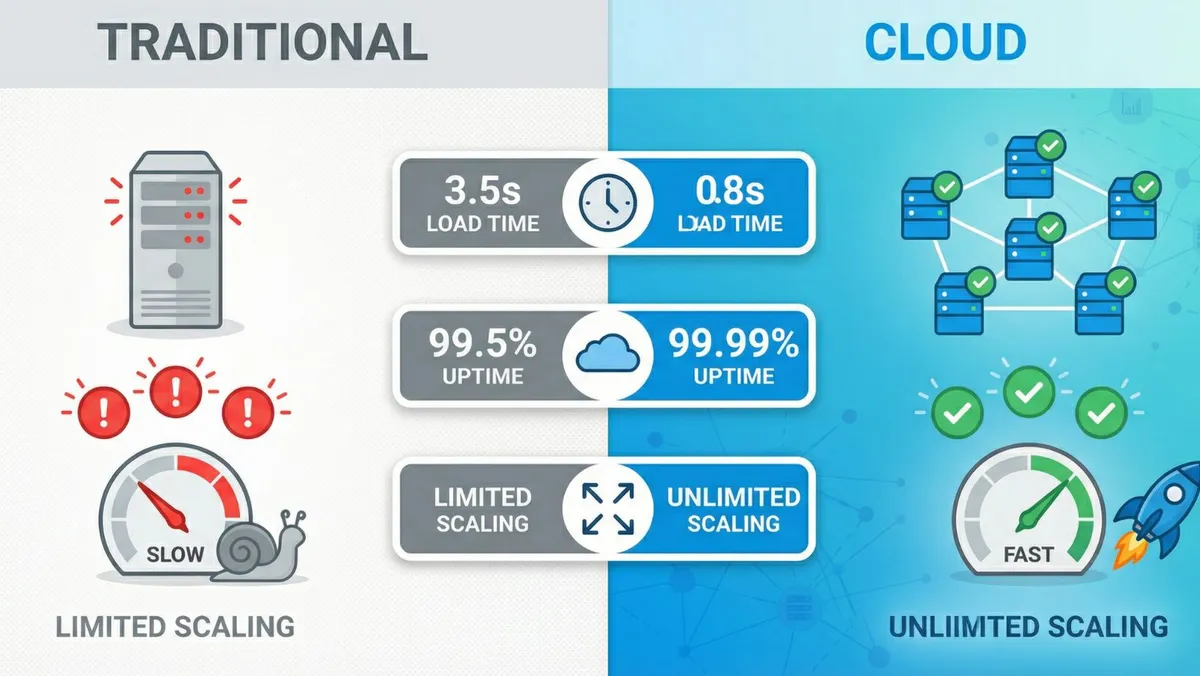
This guide explores why modern infrastructure provides the ultimate upgrade. We'll break down key features you absolutely need. Top platforms for 2026 get reviewed comprehensively below. You'll make a confident choice for your website.
Learn more about how to choose the right web hosting provider for comprehensive selection guidance and expert recommendations.
Why Modern Infrastructure Perfectly Matches WordPress
Understanding the Powerful Combination
Traditional systems tether your site to a single server. Modern infrastructure utilizes networks of servers working together seamlessly. This architecture provides several key advantages for dynamic platforms. WordPress benefits tremendously from this distributed approach.
Unmatched Scalability for Traffic Spikes
Handling Unexpected Growth
Scalable systems support sites experiencing growth or unpredictable surges. Imagine your blog post suddenly goes viral overnight. Perhaps you launch a major sale event quickly. Traditional servers slow to a crawl during these spikes. Some even crash completely under the pressure temporarily.
Modern infrastructure handles this scenario effortlessly and automatically. Resources get allocated instantly to handle increased loads. Your site stays fast and online regardless of popularity. This flexibility proves crucial for growing businesses continuously.
Explore best practices for website scalability to understand growth planning better.
Superior Performance and Speed
Optimized for Lightning-Fast Delivery
Speed represents a necessity, not a luxury anymore. Leading platforms utilize the fastest server technology available. Google's infrastructure or Amazon Web Services power these systems. Content gets distributed across networks for optimal delivery.
Content Delivery Networks (CDN) accelerate page loading dramatically. Your site's content reaches visitors from physically closer servers. Load times drop significantly across all geographic regions. Performance improvements directly impact user satisfaction and conversions.
Enhanced Reliability and Uptime
Eliminating Single Points of Failure
Traditional systems create a single point of failure. When your server goes down, your website disappears. Modern infrastructure eliminates this vulnerability completely and permanently. Networks automatically compensate for individual server issues.
One server having problems doesn't affect your visitors. Your site gets served from another machine automatically. This results in incredible uptime and reliability consistently. Serious businesses and publications require this near-constant availability.
Compare different hosting uptime guarantees across various providers comprehensively.
A Secure and Modern Foundation
Enterprise-Grade Protection
Leading providers invest heavily in security infrastructure daily. Enterprise-grade firewalls protect against sophisticated attacks constantly. Regular security patching happens automatically without user intervention. Proactive threat detection identifies problems before they escalate.
These protections far exceed standard shared server capabilities. Your website benefits from institutional-grade security measures. Data protection and visitor privacy receive maximum attention.
Key Features to Look for in WordPress Infrastructure
Essential Capabilities for 2026
Not all providers offer equal quality or features. Choosing the right platform requires evaluating specific capabilities. Here are essential features to prioritize in 2026.
Managed WordPress Experience
Hassle-Free Technical Management
Automatic Updates: WordPress core, plugins, and themes update automatically
Security Monitoring: Continuous threat detection and prevention systems
Daily Backups: Automated backups protect your data completely
Performance Optimization: Server-level caching and speed enhancements
Technical Heavy Lifting: Providers handle complex technical management tasks
Look for "managed" providers specifically and intentionally. They handle all technical heavy lifting completely. You focus on content and business growth exclusively.
Performance-Tuned Stack
Modern Server Technology
NGINX Web Server: Fast, efficient web server software
Latest PHP Versions: PHP 8.1+ for optimal performance
Server-Level Caching: Built-in caching systems accelerate delivery
Database Optimization: MySQL/MariaDB tuning for speed
HTTP/3 Support: Latest protocol for faster connections
The best providers use modern stacks optimized specifically for WordPress. Performance improvements happen at every infrastructure layer consistently.
Integrated CDN
Global Content Delivery
Worldwide Server Network: Content delivered from nearest locations
Automatic Asset Optimization: Images and files compressed automatically
DDoS Protection: Shield against malicious traffic attacks
SSL Acceleration: Faster encrypted connections for visitors
Cache Purging: Instant content updates across networks
Premium CDN inclusion saves significant monthly costs. Global load times improve dramatically across all regions.
Understand how CDN technology works for faster website delivery worldwide.
WordPress-Specific Tools
Developer-Friendly Features
One-Click Staging: Test changes safely before publishing
Automated Backups: Schedule and restore backups easily
SSH Access: Command-line access for advanced users
Git Integration: Version control for development workflows
WP-CLI Support: Powerful command-line interface tools
Quality-of-life features save tremendous amounts of time. Professional development workflows become significantly more efficient.
Expert WordPress Support
24/7 Specialized Assistance
WordPress Experts: Support team understands platform deeply
Fast Response Times: Issues get resolved quickly always
Multiple Contact Channels: Chat, phone, and ticket support
Proactive Monitoring: Problems detected before they affect users
Migration Assistance: Help moving existing sites smoothly
When you need help, expertise matters tremendously. The best providers employ genuine WordPress specialists exclusively.
Global Data Center Locations
Strategic Server Placement
Multiple Geographic Regions: Choose locations near your audience
Reduced Latency: Faster connections for regional visitors
Compliance Options: Meet regional data storage requirements
Redundancy: Backup locations ensure continuous availability
Load Balancing: Traffic distributed optimally across regions
Selecting data centers close to your primary audience reduces latency. Site speed improves significantly for target visitors.
Read our complete 2026 web hosting provider guide for more fundamental concepts and explanations.
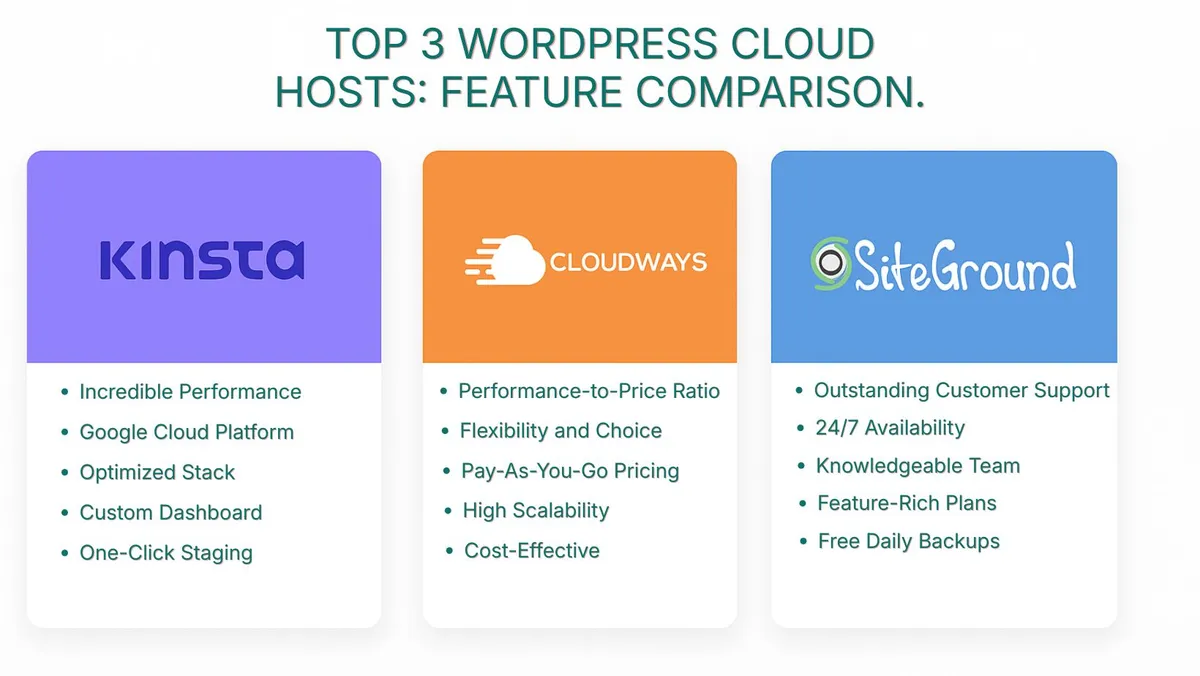
The Best WordPress Platforms for 2026
After extensive research and performance benchmark analysis, here are top picks. Support quality and feature sets were evaluated comprehensively. These platforms lead the industry in 2026.
Kinsta: The Premium Managed Experience
Built on Google's Infrastructure
Kinsta has established itself as a premium leader. Their entire infrastructure builds on Google's premium tier. Every hosted site benefits from Google's lightning-fast network. Security and performance reach exceptional levels consistently.
Key Advantages
Incredible Performance: Consistently ranks at the top in benchmarks
Google Cloud Platform: Premium tier infrastructure exclusively
Optimized Stack: Highly tuned for WordPress specifically
Custom Dashboard: "MyKinsta" provides intuitive management interface
One-Click Staging: Test changes safely before deployment
Performance Analytics: Detailed insights into site metrics
Exceptional Support: Veteran WordPress developers provide assistance
Complex Issue Resolution: Technical problems solved quickly always
Rock-Solid Security: Hardware firewalls and DDoS detection
Hack-Fix Guarantee: Security incident response included
Considerations
Premium Price: Plans start around $30-$35 monthly
No Email Hosting: Email services require separate providers
Higher Investment: Best for serious businesses and professionals
Best For
Growing businesses, e-commerce stores, and high-traffic blogs benefit most. Performance and top-tier support receive priority here. Willingness to invest in quality infrastructure is essential.
Visit the official WordPress hosting recommendations for additional platform insights and comparisons.
Cloudways: The Ultimate in Flexibility and Power
Multi-Provider Management Platform
Cloudways offers a unique and powerful approach. Instead of providing its own infrastructure directly, it acts differently. It functions as a management layer for leading providers. You host your site on your choice of five options easily.
Available Infrastructure Partners
DigitalOcean: Excellent performance-to-price ratio
Vultr: High-frequency compute optimized servers
Linode: Reliable and developer-friendly infrastructure
AWS (Amazon Web Services): Enterprise-grade scalability and reliability
Google Cloud Platform: Premium performance and global reach
Key Advantages
Performance-to-Price Ratio: Blazing speeds at affordable costs
Flexibility and Choice: Select provider matching your needs
Pay-As-You-Go Pricing: Only pay for resources you actually use
High Scalability: Resources scale up or down easily
Cost-Effective: Budget-friendly for growing businesses
Advanced Features: Built-in cache and free CDN included
Powerful Control Panel: Manage servers and applications easily
Multiple Applications: Host multiple sites on one server
Considerations
More Technical: Dashboard can overwhelm absolute beginners initially
Steeper Learning Curve: Requires more technical understanding
No Domain Registration: Domain management happens separately
No Email Hosting: Email services require separate providers
Best For
Developers, agencies, and experienced users benefit tremendously. Maximum control, flexibility, and performance without premium pricing. Technical confidence required for optimal utilization here.
Compare DigitalOcean vs Vultr vs Linode for infrastructure selection guidance.
SiteGround: The Best All-Around Performer
WordPress Community Favorite
SiteGround has earned long-standing WordPress community respect. WordPress.org officially recommends them as a trusted provider. They transitioned fully to Google's infrastructure recently. Performance received a significant boost from this upgrade.
Key Advantages
Outstanding Customer Support: Famous for fast, friendly assistance
24/7 Availability: Help available anytime, any day always
Knowledgeable Team: WordPress expertise runs deep throughout
Feature-Rich Plans: Entry-level plans include premium features
Free Daily Backups: Automated backups protect your data
Free CDN: Content delivery network included at no cost
Free Email Hosting: Professional email addresses included
Custom Caching System: Proprietary speed optimization technology
User-Friendly Tools: Custom control panel simplifies management
One-Click WordPress Installer: Fast deployment and setup
Staging Tool: Available on higher-tier plans
Great Value: Fantastic balance of performance, features, affordability
Considerations
Higher Renewal Rates: Introductory prices increase significantly later
Resource Limits: Plans include defined storage and traffic limits
Renewal Shock: First-year pricing doesn't reflect ongoing costs
Best For
Beginners, bloggers, and small to medium-sized businesses thrive here. Reliable, fast, and user-friendly hosting with exceptional support. Top-notch assistance makes complex tasks manageable easily.
Read our comprehensive hosting comparison guide for different infrastructure types explained.
Common Mistakes to Avoid
Critical Errors That Cost Money and Performance
Learning from others' mistakes saves time and money. Here are critical errors to avoid completely.
Choosing Unmanaged Plans Without Skills
The Technical Expertise Trap
Unmanaged servers offer power but require significant expertise. Configuration and maintenance demand advanced technical knowledge constantly. Server administration skills become absolutely necessary daily.
Solution: Stick with managed providers unless you're a server administrator. Technical complexity overwhelms most users quickly and frustratingly.
Ignoring Support Quality
The Hidden Cost of Poor Assistance
Support quality determines your experience during critical situations. When your site goes down, fast helpful responses matter tremendously. Poor support extends downtime and increases lost revenue.
Solution: Research support reputation before committing to providers. Test support responsiveness during the evaluation period always. Read authentic user reviews about support experiences carefully.
Not Considering Scalability
The Growth Barrier Problem
Some providers make resource upgrades difficult or expensive. Your site grows but infrastructure can't accommodate expansion. Migration becomes necessary, causing downtime and complications regularly.
Solution: Choose providers making resource upgrades simple and straightforward. Confirm upgrade processes before signing up initially always.
Forgetting About Backups
The Data Loss Nightmare
Most managed providers offer backups as standard features. Relying solely on provider backups creates single points of failure. Having your own off-site backup solution provides critical redundancy.
Solution: Implement independent backup solutions for peace of mind. Consider using one of the best cloud storage solutions for small businesses for secure off-site backup storage.
Explore WordPress backup best practices for comprehensive data protection strategies.
Getting Locked into Long-Term Plans Prematurely
The Commitment Trap
Long-term contracts offer lower monthly rates attractively. However, dissatisfaction with service locks you into problematic situations. Changing providers midway through contracts costs money unnecessarily.
Solution: Take advantage of monthly billing options initially. Money-back guarantees allow testing providers before committing long-term. Confirm satisfaction before signing multi-year contracts ever.
requently Asked Questions (FAQ)
Is modern infrastructure better than VPS for WordPress?
For most users, managed solutions prove superior overall. Automatic scalability handles traffic spikes effortlessly and automatically. Higher reliability comes from networked infrastructure design. VPS represents a single virtual server still potentially. Single points of failure still exist with VPS options.
Is this difficult for beginners to use?
Managed solutions from providers like Kinsta and SiteGround remain very beginner-friendly. They provide intuitive dashboards and attractive interfaces throughout. All technical management gets handled automatically for you. Focus stays on content and business growth exclusively.
How much does WordPress infrastructure cost?
Pricing varies significantly across different provider tiers. Flexible platforms like Cloudways start around $11-$14 monthly. Premium managed providers like Kinsta begin at $30-$35 monthly. Higher costs than shared servers but performance justifies expenses. Serious websites benefit tremendously from this investment consistently.
Can I migrate my existing WordPress site?
Yes, migration happens frequently and successfully always. Most managed providers offer free or paid migration services. Your existing site moves with minimal downtime typically. Professional migration assistance ensures smooth transitions consistently reliably.
Do I need to be a developer to use this?
Not at all, provided you choose managed providers wisely. They're built for everyone from bloggers to developers. Simple interfaces manage powerful backend systems effortlessly. Technical complexity stays hidden behind user-friendly dashboards consistently.
Learn about WordPress migration best practices for smooth site transfers.
Conclusion: Power Your WordPress Site for the Future
Performance standards continue rising as we look toward 2026. Choosing the right platform represents one of the most impactful investments. Speed, scalability, and reliability determine your website's success fundamentally. Excellent user experiences support your growth and revenue goals.
Whether you opt for Kinsta's premium all-in-one solution works perfectly, the flexible power of Cloudways suits your needs ideally, or SiteGround's well-rounded supportive environment matches your requirements—moving your WordPress site represents a decisive step forward. Faster and more resilient online presence becomes your competitive advantage.
Explore GTmetrix speed testing tools to analyze your current site's performance metrics comprehensively.
Your website deserves the best foundation available in 2026. Modern infrastructure provides the speed and reliability visitors expect. Invest wisely in your online presence today. Your future success depends on this critical decision.
Frequently Asked Questions
A flexible platform like Cloudways can start around $11-$14/month. 10 Premium managed hosts like Kinsta start at $30-$35/month.
Never Miss an Update
Join thousands of readers getting the latest insights on technology, business, and digital marketing.