How to Make Money with AI-Generated Art Online in 2025
AI art isn’t just a fun trend anymore—it’s a real income stream. This guide shows you exactly how to turn AI-generated images into sustainable revenue in 2026.
Minhaj Sadik
You’ve seen the viral AI images all over social media, and you’ve probably experimented with tools like Midjourney, DALL·E, Stable Diffusion, or local models yourself. The real question nagging at you now is simple: If I...
Too long? Ask AI to summarize
Get a quick summary of this article using your favorite AI assistant
INTRODUCTION & KEY TAKEAWAYS
The Core Problem
You’ve seen the viral AI images all over social media, and you’ve probably experimented with tools like Midjourney, DALL·E, Stable Diffusion, or local models yourself. The real question nagging at you now is simple: If I can create something this impressive in seconds, how do I actually turn it into money? That’s the core problem most people face in 2026. There is no shortage of AI art, but there is a serious shortage of strategy.
Marketplaces are flooded with low-effort images, platform rules are getting stricter, and buyers are more skeptical than ever. Many creators throw up a few AI-generated designs on Etsy or a print-on-demand site, get almost no traffic or sales, and walk away thinking that “AI art is dead.” In reality, AI art can still be very profitable, but not if you treat it like a lottery ticket. You need a focused niche, a clear customer in mind, and a plan for turning images into real products that solve a problem or deliver a specific emotional payoff.
This guide is going to walk you step-by-step through how to do exactly that. You’ll see where AI fits into a real business, what kinds of AI art actually sell, and which income streams are worth your time in 2026. We’ll also cover ethics, platform policies, and the biggest mistakes that silently kill most AI art shops before they have a chance to grow.
The Direct Answer
You make money with AI-generated art in 2026 by turning your images into clear, valuable products and selling them through the right channels, not by randomly uploading art and hoping for the best. The most reliable ways to earn are: selling print-on-demand products (like posters, shirts, and canvases), offering digital downloads (such as wallpapers, coloring pages, clip art, and templates), licensing images through stock platforms, and offering custom commissions or branding work for clients.
To succeed, you choose one niche, develop a consistent visual style, and build product bundles that target a specific kind of buyer. You stay transparent about using AI, follow each platform’s rules, and focus on traffic sources like SEO, social media, and email lists. When you combine these with basic business habits—testing, tracking, and improving—you move from “experimenting with AI tools” to running a real, income-generating creative business.
COMPREHENSIVE ANALYSIS
High-Earning AI Art Niches in 2026
Not every AI-generated image has the same earning potential. In 2026, the creators who make the most money aren’t the ones generating the wildest visuals; they’re the ones who understand who they are serving and why those people buy visual products in the first place. Your niche is less about what the AI can produce and more about the specific taste, lifestyle, and needs of your ideal customer. Picking the right niche can be worth far more than obsessing over the perfect prompt.
1. Home and Office Decor (Prints & Posters)
Wall art remains one of the strongest ways to monetize AI images. People upgrade their home offices, living rooms, and bedrooms constantly, especially now that remote work and content creation are so common. AI art lets you produce abstract pieces, minimalist line drawings, nature scenes, space art, or cityscapes that match popular aesthetics like boho, Scandinavian, or cyberpunk. These pieces translate perfectly into print-on-demand products like framed posters, canvas prints, and art boards.
What buyers care about most in this space is how the art will look in their room, and whether it fits the mood they want to create. That means your success isn’t just about the artwork itself; it’s also about great mockups, consistent color palettes, and clear listing photos that show the art in styled rooms. If you can make buyers imagine your AI-generated piece on their wall in seconds, your chances of conversion go way up.
2. Digital Downloads and Productivity Assets
Digital products are especially powerful because they require no physical inventory and can be sold over and over again with almost no extra work. With AI, you can quickly create themed wallpaper packs, printable wall art, planner covers, journaling pages, coloring books, clip art bundles, and background packs for content creators. These products are perfect for platforms like Etsy, Creative Market, Gumroad, or a simple storefront on your own website.
Customers buy digital downloads not just for beauty but for function: teachers need clip art for worksheets, parents want coloring pages to keep kids engaged, and planners need pretty covers they can print or use on tablets. If your AI art solves a small but real problem—like giving a teacher a ready-made classroom decor pack—you instantly become more valuable than someone who just uploads random experimental images.
3. Assets for Content Creators and Small Brands
Every YouTuber, podcaster, freelancer, and small business owner needs visuals. They need thumbnails, banners, social media posts, presentation backgrounds, course covers, and more. AI-generated art can give you a serious edge here because you can rapidly prototype ideas and customize them for each client. If you position yourself as an “AI-assisted visual designer” who can deliver fast, unique, and on-brand graphics, you offer something very attractive.
Instead of selling one piece at a time, you can package your services into bundles: a monthly thumbnail pack, a full brand visuals kit, or a set of social templates. This turns AI art from a one-off sale into predictable recurring income. The AI handles the heavy lifting, while your value lies in taste, consistency, and understanding what converts for creators and businesses in your niche.
4. Fandom, Lifestyle, and Micro-Communities
Another powerful niche area is micro-communities and fandom-inspired aesthetics, as long as you respect copyright and don’t copy specific characters or trademarks. You can create fantasy maps for tabletop gamers, retro-style designs inspired by certain eras, pet-themed art, or visuals tailored to specific hobbies like van life, lifting, skating, or coding. These communities hang out in very visible online spaces, which makes it easier to see what they share, like, and comment on.
The key is that AI is only the tool, not the business model. Your actual advantage is understanding what a particular group loves, what jokes or symbols they resonate with, and how they like to express their identity through decor, clothing, or digital assets. If you can nail that combination—taste, community insight, and AI production—you can build profitable product lines that feel tailored instead of generic.
Step-by-Step: Launching Your First AI Art Income Stream
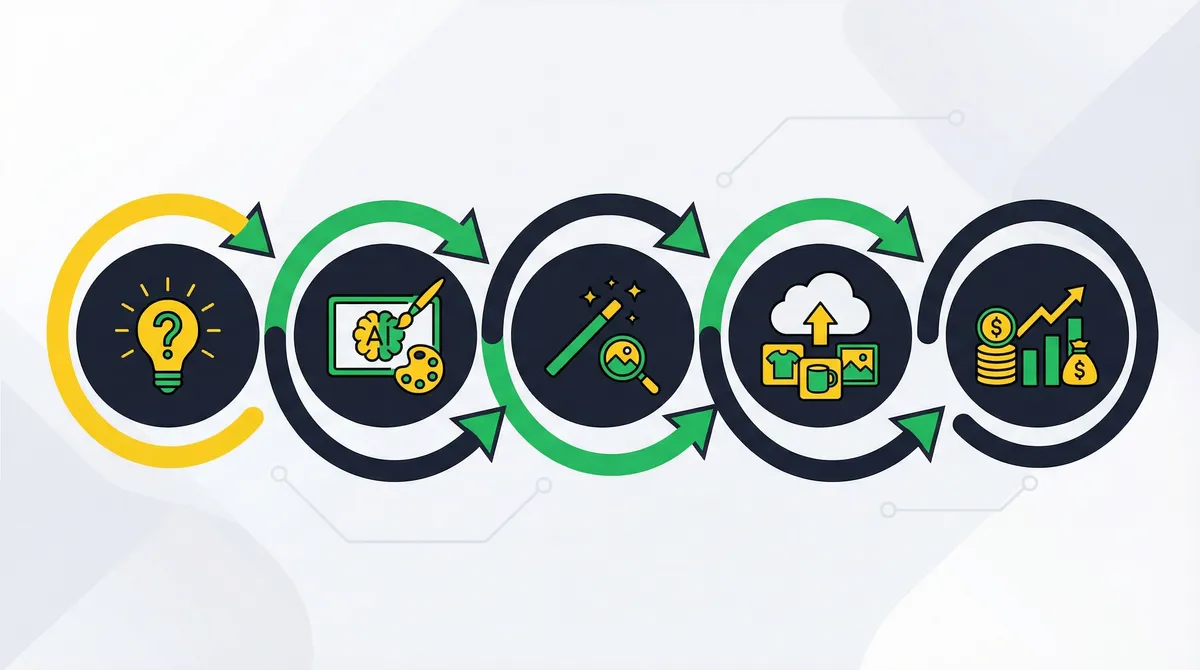
This is the practical part: a clear, numbered playbook that takes you from “I have cool AI images” to “I have a real product that can make sales.” You don’t need to be a professional designer or business expert to follow these steps, but you do need to commit to taking them in order and giving each step enough time. Think of this as a simple launch recipe for your first AI art side hustle.
1. Define Your Niche and Audience
Start by getting specific about who you want to serve. Instead of saying, “I’ll sell art to everyone,” decide that you’re creating, for example, “neutral minimalist office prints for remote workers” or “bold neon cyberpunk wallpapers for gamers.” Write down the age range, lifestyle, interests, and style preferences of that person. Then search Etsy, Redbubble, or stock sites for similar terms and look at the top sellers.
Notice what styles keep appearing, which colors are popular, and how products are packaged. This quick research tells you two things: that people are actually buying in your niche, and what gaps you might be able to fill. One of the easiest wins is to take a proven concept—like boho wall art—and give it a fresh twist with a different theme, color palette, or audience focus while avoiding direct copying of other creators’ work.
2. Choose One Main Platform to Start
The next mistake many beginners make is scattering their attention across too many platforms at once. Instead, choose one primary platform for your initial launch. Etsy is fantastic for digital downloads and printable wall art; print-on-demand marketplaces are great for shirts, posters, and accessories; stock platforms are ideal for slow-building, passive licensing; and your own website gives you maximum control but requires more effort to drive traffic.
Your choice should match your current strengths. If you’re comfortable writing descriptions and doing light SEO, Etsy might be your best first move. If you hate marketing but don’t mind slowly uploading to big libraries, stock sites can work in the background. You can always expand later, but starting focused means you actually learn how to win in one environment instead of being mediocre everywhere.
3. Develop a Cohesive Visual Style
Even with powerful AI models, a random collection of styles won’t build trust. Shoppers want to feel like they’ve walked into a well-curated studio, not a chaotic experiment lab. Pick one main style direction for your first store: clean line art, dreamy pastels, dark fantasy, vaporwave, or whatever fits your niche. Then create a set of core prompts and parameters that you re-use and refine over time.
On top of that, use consistent color palettes, similar aspect ratios, and editing habits. Run your outputs through an editor to upscale, sharpen, and fix small details. When someone scrolls your storefront, it should feel obvious that all the work comes from the same creative mind, even if AI helped generate the base images. This consistency alone can significantly increase your perceived professionalism and boost conversion rates.
4. Build Your First Product Set
Rather than posting one-off images, structure your work into products and collections. For digital products, this might mean creating a pack of 20 phone wallpapers, a bundle of 10 printable posters, or a coloring book of 40 pages around a single theme. For print-on-demand, it might mean offering a series of three coordinating wall prints that are designed to be displayed together in a home office or bedroom.
Think in terms of buyer psychology: bundles feel like better value, and themed sets make decision-making easier. You can also create multiple tiers, such as a small low-priced pack for entry, a larger bundle for your main offer, and a premium option that includes commercial usage or extra files. This lets your AI art serve different budgets and use cases without needing completely new designs for each offer.
5. Optimize Listings for Search and Conversion
Even the most beautiful product will sit invisible if your listing is poorly written or hard to find. For each product, use search terms that buyers actually use in your title, such as “Neutral Boho Office Wall Art Set – Printable Digital Download” instead of something vague like “Beautiful AI Art Pack.” In the description, clearly explain what the buyer gets, how many files, what resolutions, and how they can use the product. Answer common questions right in the copy to remove friction.
Your images matter just as much as the text. Use mockups that show your art in real environments: above desks, on phones, inside frames, or in planners. Make it easy for someone to imagine how your product will look in their life. Also, be transparent and ethical by mentioning that your artwork is AI-assisted and then refined or edited by you. This builds trust and keeps you aligned with evolving platform policies.
6. Drive Targeted Traffic
Relying only on marketplace search algorithms is risky and slow. To improve your chances, layer in at least one additional traffic source. For visual products, platforms like Pinterest and Instagram are excellent because you can repurpose your mockups as content. Short-form videos on TikTok or Reels showing “process” clips, room makeovers, or before-and-after shots also tend to perform well.
At the same time, start building an email list, even if it’s tiny at first. Offer a free wallpaper pack, print, or mini coloring book as a lead magnet. Once people join, you can send new product announcements, discounts, and curated recommendations. Over time, this list becomes one of your most valuable assets and reduces how dependent you are on any single platform or algorithm.
7. Analyze Results, Iterate, and Scale
After launching, your main job is to watch how people respond and then adjust. Track which listings get the most views, saves, favorites, or sales. Look for patterns in themes, colors, or product types that outperform others. When you notice what works, lean into it: create more variations, bundles, and complementary products in that direction instead of constantly starting from scratch in new styles.
Once you have a small “hit list” of proven designs, you can scale horizontally and vertically. Horizontally means bringing the same art to other platforms like stock sites or print-on-demand marketplaces. Vertically means creating higher-priced offers like larger bundles, commercial licenses, or branding packages. Step by step, you move from a fragile experiment to a creative micro-business with multiple income streams backed by real data.
EXPERT INSIGHTS
Pros, Cons, and Data
Using AI-generated art to earn income in 2026 comes with huge upside but also real limitations. Understanding both sides helps you design a business model that is realistic, sustainable, and aligned with your values. The goal is not to pretend AI is magic, but to see where it amplifies your strengths and where you still need human judgment, taste, and strategy.
Pros of Making Money with AI Art:
Rapid Creation: You can test many concepts and styles in a fraction of the time traditional methods require, letting you iterate based on what sells instead of guessing.
Low Startup Costs: With a basic computer and access to AI tools, you can start creating commercial-quality images without expensive hardware or years of training.
Scalable Digital Products: Downloads, stock images, and templates can sell thousands of times without needing extra production or inventory.
Creative Flexibility: You can explore different aesthetics and markets quickly, then concentrate on the ones that respond best to your work.
Accessibility: People who struggle with drawing or painting can still build a visual brand and offer valuable assets to buyers.
Cons and Limitations:
Crowded Marketplaces: Many people are trying to do the same thing, so unpolished or generic work gets buried easily.
Policy and Legal Questions: Platforms and regulators are still evolving their rules regarding AI content, copyright, and disclosure, so you must stay updated and careful.
Quality Control Issues: AI outputs can contain odd artifacts or inaccuracies that require manual editing to be truly professional.
Ethical Concerns: Discussions around training data and the impact on traditional artists can shape customer perception and platform limitations.
Unstable Income Early On: It can take months of consistent effort before your catalog and traffic reach a point where income becomes predictable.
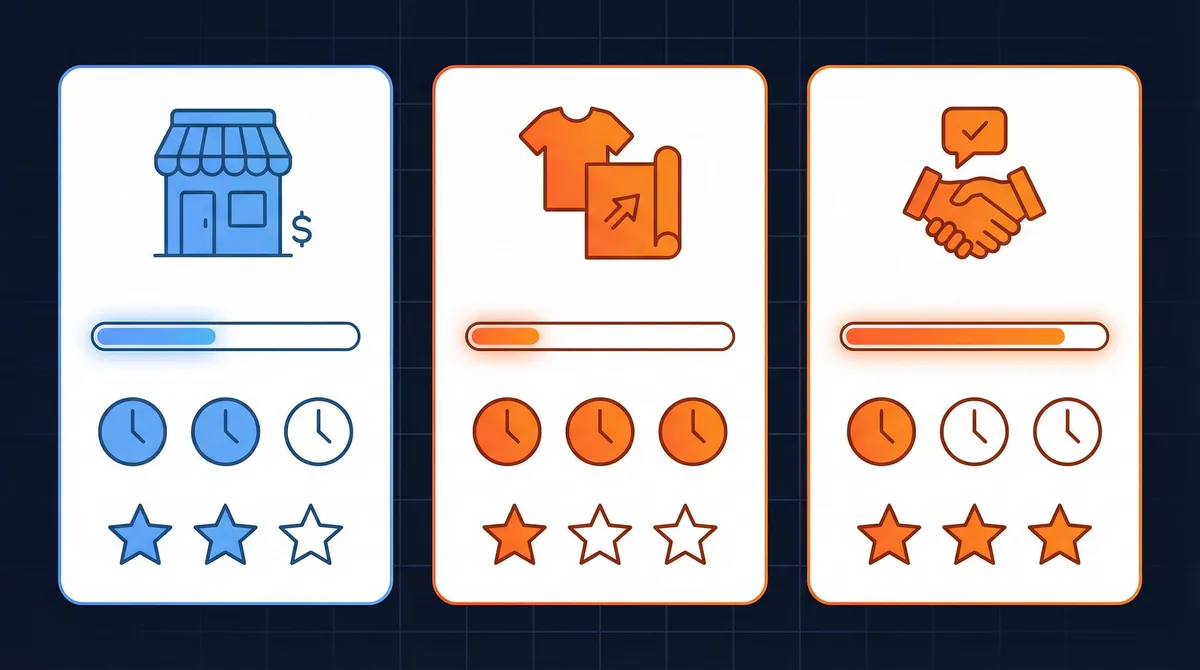
Text-Based Comparison: Common AI Art Income Streams in 2026
Income Stream | Difficulty to Start | Time to First Sale* | Scalability | Control Over Brand |
|---|---|---|---|---|
Print-on-Demand (POD) | Low–Medium | Weeks | High | Medium |
Etsy Digital Downloads | Medium | Days–Weeks | High | High |
Stock Image Licensing | Medium | Months | Very High | Low |
Custom Commissions | Medium–High | Days–Weeks | Limited (time) | Very High |
Your Own Website/Shop | High upfront effort | Varies (traffic) | Very High | Maximum |
*Rough estimates. Actual results depend on niche, product quality, and marketing.
In practice, many successful creators combine several streams. For example, they might start with Etsy digital downloads to get fast feedback, then turn their best-selling designs into print-on-demand products and later upload refined versions to stock platforms. Over time, they might layer on custom commissions or brand packages and gradually transition to selling primarily via their own website and email list. That multi-stream approach gives stability and lets AI art work for you in several ways at once.
Common Mistakes to Avoid
Most failed AI art businesses don’t collapse because the art is “bad” but because the strategy is missing. By avoiding a few common pitfalls, you immediately put yourself in a stronger position than the majority of people who try this and give up. Think of this section as your checklist of what not to do while you’re building your presence in 2026.
1. Uploading Random Images with No Niche
One of the biggest mistakes is treating marketplaces like a dumping ground for experiments. When your storefront is full of unrelated styles, themes, and products, buyers don’t know what you stand for and leave quickly. Instead, you want them to feel like they’ve found a specialist who understands their taste and needs. A tightly defined niche instantly makes your shop easier to understand and trust.
2. Ignoring Platform Rules and Copyright Risk
Some creators still generate AI images that are very close to known characters, logos, or celebrity faces, hoping to catch viral demand. This is risky and short-sighted. Platforms can suspend your account, and in some cases you may face legal problems. Take the time to read the terms of each platform you use, and avoid any content that clearly steps on existing intellectual property. Playing the long game is worth more than a quick spike in attention.
3. Posting Raw AI Outputs Without Editing
Unedited AI art often includes small but noticeable flaws in hands, faces, text, or proportions. When buyers spot these issues in your previews or printed pieces, they lose trust in your quality. Always run your best outputs through an editing process: upscale them, fix obvious defects, and adjust colors and contrast. A little extra polish can be the difference between “this looks cheap” and “this looks like high-end art.”
4. Underpricing Because It Was ‘Fast to Make’
It’s easy to tell yourself that because the AI generated the base image quickly, the final product isn’t worth much. That mindset pushes many creators into a race to the bottom on price. Remember, buyers pay for the finished result, the curation, the bundle, the branding, and the time saved—not just the raw generation. Price competitively for your niche and the value your product delivers, not simply for the minutes it took to produce.
5. Giving Up Too Soon
Finally, many people abandon their AI art projects right before they would have started to see patterns and traction. Your first 10–20 products are rarely your best or most profitable. They’re test runs. If you walk away after a month because the numbers are small, you never reach the point where your catalog, reviews, and traffic compound. Commit upfront to a window of at least three to six months where you will keep creating, learning, and refining. That’s how you give yourself a real chance to win.
SUMMARY & FAQ
Final Verdict
AI-generated art in 2026 is still a powerful way to make money online, but only if you approach it like a genuine creative business instead of a quick hack. By choosing a focused niche, building a consistent visual style, and turning your images into real products that solve specific needs, you can create multiple income streams through print-on-demand, digital downloads, stock licensing, and client work. AI becomes the engine that powers your production, while your strategy, taste, and ethics determine how far you can go.
The most sustainable success usually comes from starting with one main platform and product type, then slowly expanding as you see what works. Layering in traffic sources like SEO, social media, and email helps stabilize your income and protect you from algorithm changes. If you’re willing to test, track, and improve your offers instead of chasing shortcuts, AI art can be a serious asset in your online income portfolio.
So, which niche or product type feels most aligned with your skills and interests—and what is the very first AI art product you’re willing to commit to launching this month?
Frequently Asked Questions
1. Is it too late in 2026 to start making money with AI art?
It’s not too late, but it is more competitive, which means you can’t rely on low-effort uploads anymore. Success now depends on choosing a niche, delivering polished products, and building basic marketing skills like writing good listings and sharing consistent content. Instead of asking whether the wave has passed, ask how you can stand out in the market that exists today. Focus, quality, and a real understanding of your audience matter more than being early.
2. Do I need traditional art skills to profit from AI-generated art?
You don’t need to be able to draw or paint in the traditional sense, but you do need a good eye for visuals. That includes understanding basic composition, color harmony, typography, and what your buyers actually like to look at every day. You also need to learn how to guide AI tools with strong prompts and how to refine outputs through editing. Think of AI as a creative partner that amplifies your taste, not as a replacement for your judgment.
3. How much can I realistically earn, and how long does it take to see results?
Earnings vary widely, from a few extra dollars per month to four- or even five-figure monthly incomes for creators with multiple streams and strong catalogs. Realistically, you might see your first small sales within a few weeks if you launch properly and target a good niche. It often takes several months of consistent uploading and marketing before things feel stable. The more you treat this as a real business—tracking what works, doubling down on winners, and building an audience—the more your income can grow over time instead of staying stuck at “side experiment” level.
Frequently Asked Questions
It’s not too late, but it is more competitive, which means you can’t rely on low-effort uploads anymore.
Never Miss an Update
Join thousands of readers getting the latest insights on technology, business, and digital marketing.