AI Side Hustles: 9 Proven Ways to Make Money in 2025
AI side hustle are exploding in 2026, but most people don’t know where to start. This guide shows you 9 proven AI side hustle, and simple steps to get started.
Minhaj Sadik

In 2025, a survey from the St. Louis Fed found that 54.6% of adults aged 18–64 were using generative AI , up from 44.6% just a year earlier. At the same time, a Freelancer.com report showed that 73% of freelancers alread...
Too long? Ask AI to summarize
Get a quick summary of this article using your favorite AI assistant
Introduction & Key Takeaways
Why AI Side Hustles Are Exploding in 2026
In 2025, a survey from the St. Louis Fed found that 54.6% of adults aged 18–64 were using generative AI, up from 44.6% just a year earlier. At the same time, a Freelancer.com report showed that 73% of freelancers already use generative AI tools in their work, with most saying their earnings stayed the same or increased. In other words, AI isn’t just a buzzword anymore—it’s baked into how people make money online.
You see AI side hustles everywhere on YouTube, TikTok, and Twitter threads promising fast money with tools like ChatGPT, Midjourney, and other generators. Some of those ideas are realistic, but many are thin, spammy, or dependent on short-lived platform tricks. If you jump in without a plan, you risk burning time on content that never pays, or worse, falling for scams dressed up as “AI success systems.”
The good news is that there are real, sustainable AI side hustles that focus on solving useful problems for clients and audiences, not chasing hype. In this guide, you will learn what AI side hustles actually are, which models have the best chances of paying in 2026, and how to launch your first one without needing to code. By the end, you will have a short list of options, a clear step-by-step playbook, and practical tips to avoid the traps that waste time and money.
The Direct Answer
AI side hustles are income-generating projects where you use AI tools—such as ChatGPT, image generators, or AI video tools—to sell services, digital products, or content online. Instead of replacing your skills, AI speeds up tasks like writing, design, research, and editing so you can serve more clients or build more products in less time.
The most reliable AI side hustles in 2026 include content writing with AI support, AI thumbnail and design services, AI video and short-form content production, prompt and template stores, AI-powered freelancing, and niche digital products. To start, you pick a simple problem, choose an AI tool that helps, create one strong offer, and reach out to a small group of target customers. When that works, you systemize your process and slowly scale into higher-paying work instead of chasing quick hacks.
Comprehensive Analysis
What Are AI Side Hustles and Why Do They Matter?
Defining AI side hustles
An AI side hustle is any project where you use AI tools to create value for someone else and get paid, usually on top of your main job. That might mean you use ChatGPT to draft blog posts for small businesses, Midjourney or DALL·E to create product mockups, or AI video tools to produce short-form clips for creators. The AI handles the repetitive or time-consuming parts while you handle direction, quality, and client communication.
AI side hustles are different from traditional side gigs because your “assistant” never sleeps. Salesforce found that 71% of marketers expect generative AI to eliminate routine “busy work” and save around five hours per week, freeing them to focus on higher-value tasks. If you apply the same idea to your side business, one person can do the work that used to require a small team, especially in content-heavy fields.
Common AI side hustles include:
AI-assisted content writing for blogs, newsletters, and social posts
AI thumbnail and design services for YouTube creators and ecommerce brands
AI video creation for TikTok, Reels, and YouTube Shorts
Prompt and template shops on marketplaces or your own site
AI-enhanced freelancing in marketing, research, or admin support
Each of these can be tuned to a niche, such as local businesses, creators in a certain topic, or SaaS companies that need ongoing content.
Why AI side hustles are growing so quickly
Several trends are pushing AI side hustles into the mainstream. A 2024 Forbes Advisor poll found that 79% of UK workers had already used generative AI at work, showing that most professionals are at least experimenting with tools like ChatGPT. A 2025 article from the St. Louis Fed reported that generative AI adoption among adults jumped ten points in a single year, from 44.6% to 54.6%, and continues to climb.
Freelancer.com’s global survey of over 4,300 freelancers in late 2024 found that 73% use generative AI tools in their work, and most report earning the same or more than before. Another analysis noted that more than half of freelancers said AI had no negative impact on their earnings, with many actually seeing higher pay due to better productivity. These data points suggest that AI, when used wisely, can support income growth rather than erasing opportunities.
At the same time, traditional wages are under pressure and living costs keep rising, so people want income that is flexible, online, and scalable. AI tools fit neatly into that desire: you can start with free or low-cost tools, work from anywhere, and steadily turn knowledge plus AI into digital products, services, or content libraries.
Why AI side hustles beat “AI slop”
You’ve probably seen AI-generated videos or posts that feel spammy or low-effort. A Washington Post investigation described a wave of “AI slop” content flooding platforms like TikTok and YouTube, created in minutes with AI tools purely to chase ad revenue. These approaches might earn money for a small group of early adopters, but they carry high risk because platforms constantly adjust algorithms and policies to fight spam and misinformation.
Serious AI side hustles take a different path. They:
Focus on real clients and real problems, not loopholes
Use AI to improve quality and speed, not replace care or honesty
Build assets that last, like client relationships, email lists, or digital products
Respect platform rules and avoid practices likely to be banned
If you approach AI side hustles as a craft rather than a trick, you are much more likely to build something that still works next year.
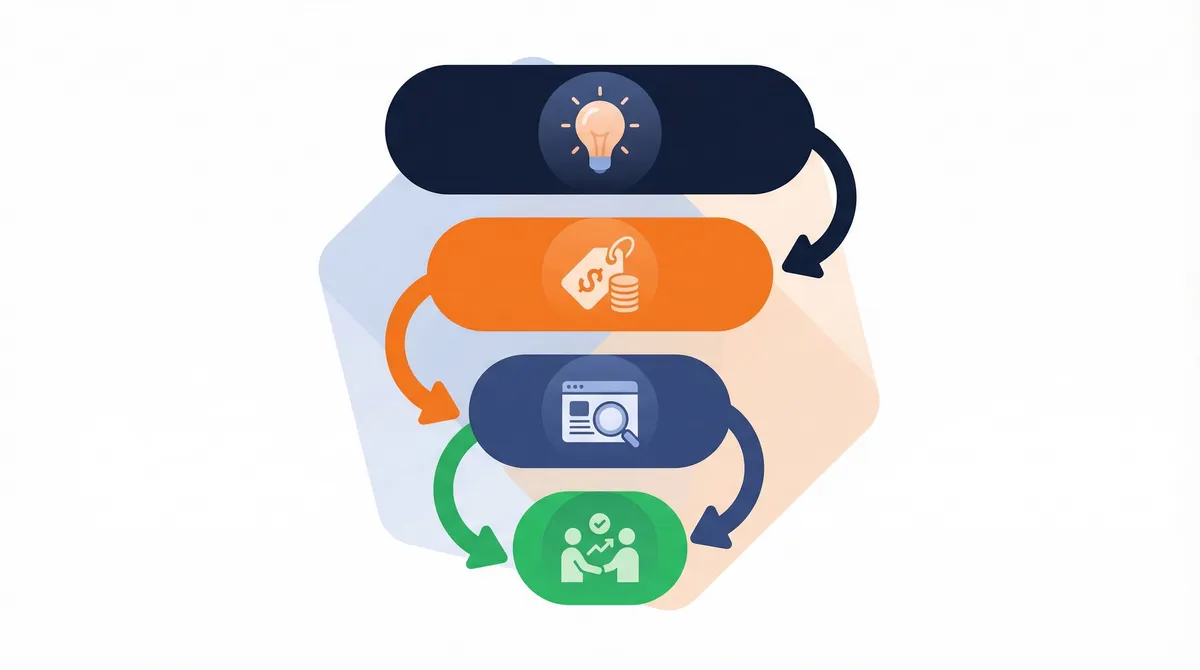
Step-by-Step – How to Start Your First AI Side Hustle
Step 1: Choose one clear problem to solve
Start by asking: who do you want to help and what problem do they pay to solve? For example, busy YouTubers need thumbnails and video scripts, local service businesses need Google Business posts, and coaches need email sequences. The narrower your niche, the easier it is to write good offers and find examples.
Write one sentence: “I help [type of client] with [specific outcome] using AI tools.” For instance, “I help fitness coaches publish weekly email newsletters using AI-assisted writing.” This gives you focus and stops you from chasing every tool you see on social media.
Step 2: Pick a simple AI tool stack
Next, pick one or two AI tools you will rely on instead of collecting ten that you never learn deeply. For many side hustles, a strong language model like ChatGPT, Gemini, or Claude plus one visual or video tool is enough. Surveys from Salesforce and other sources show heavy adoption of generative AI across marketing and service teams, mostly for tasks like drafting, editing, and content ideas.
Choose tools based on:
What your clients already use or recognize
How comfortable you feel with the interface
Whether you can export work in the formats they need
You can always upgrade tools later; your process matters more than the brand.
Step 3: Design a simple, valuable offer
Now turn your skills plus AI into a clear offer. Instead of saying “AI services,” say “4 YouTube shorts per week with scripts, captions, and thumbnails” or “SEO blog posts with a brief, draft, and final version in five days.” Packages make it easier for buyers to say yes and help you estimate effort and pricing.
Good offers are:
Specific about what is delivered
Clear about timelines and revisions
Tied to a meaningful outcome such as engagement, leads, or time saved
You can start on the lower end of pricing to get proof of concept, then raise rates when you have testimonials and smoother systems.
Step 4: Create one strong portfolio sample
Before you pitch anyone, create one high-quality sample project that looks like what you plan to sell. If you want to do AI-assisted blogging, write a full post for a fictional or real brand in your niche. If you plan to sell AI thumbnails, design a full set for a YouTube channel idea.
Use AI to handle first drafts or variations, then polish with your own judgment. Adobe’s creator survey found that 86% of creators now use generative AI, but many of them use it mainly for editing, upscaling, and enhancing rather than leaving outputs untouched. This is the model you should follow: AI as helper, you as editor and owner of the taste.
Step 5: Get your first three clients
Instead of waiting to “be discovered,” you actively reach out. Start close to home:
Past clients or employers
Friends who run businesses or make content
Communities where your target audience hangs out
Send short, respectful messages that show you understand their work and offer a tiny, low-risk starting point, such as one trial asset or a discounted first month. Articles from Entrepreneur and other business sites highlight that many profitable AI side hustles begin exactly this way—small, manual outreach that builds into recurring work.
Step 6: Systemize your process with checklists
Once you start working with clients, design checklists for each offer. For example, your “AI blog post package” checklist might include:
Receive brief and keywords
Research with AI and manual checks
Draft outline with AI, then adjust
Generate first draft and edit by hand
Run plagiarism and fact checks
Deliver and revise once
This is where AI really shines, because you can build custom prompts for each step and reuse them. Over time, your “playbooks” give you leverage: you can work faster without cutting quality, and you can even train a helper later if you want to scale.
Step 7: Gradually raise prices or move up-market
As you gather results and testimonials, raise your prices or move to clients with bigger budgets. Freelancer and other surveys point out that freelancers using AI often see wage gains because they deliver more value in less time. Instead of simply doing more low-priced work, focus on clients who care about outcomes and can pay for them.
You can also add related offers, such as analytics reports, content calendars, or conversion-focused edits. However, always maintain your base: one or two core offers that you can deliver smoothly and confidently.
Expert Insights
Pros, Cons, and Data
AI side hustles come with real upside, but they are not magic money machines. Understanding the strengths and weaknesses helps you pick a plan that fits your time, skills, and risk tolerance.
Advantages:
✅ Low startup cost: Many AI tools have free tiers or affordable monthly plans, which means you can test services without big upfront investment. Business press coverage shows people starting income streams with little more than a laptop and a single AI subscription.
✅ High productivity: Surveys of workers and creators show that AI often saves several hours per week on drafting, editing, and research tasks, which directly supports higher output per hour.
✅ Growing demand for AI help: Many businesses know they “should use AI” but have no idea where to start, so they hire freelancers to set up tools, content systems, or automations for them.
✅ Flexible schedule: Most AI side hustles are digital and project-based, so you can work evenings, weekends, or between other responsibilities.
Disadvantages:
❌ Hype and misinformation: Articles and videos sometimes promise unrealistic earnings with minimal work, which leads people to quit after a few weeks when easy money does not show up.
❌ Tool dependence: If you rely on one platform and pricing changes or features are limited, your margins can shrink quickly.
❌ Quality and ethics risks: Poorly reviewed AI outputs, plagiarism, or spammy tactics can damage your reputation and, in some cases, violate platform rules or copyright.
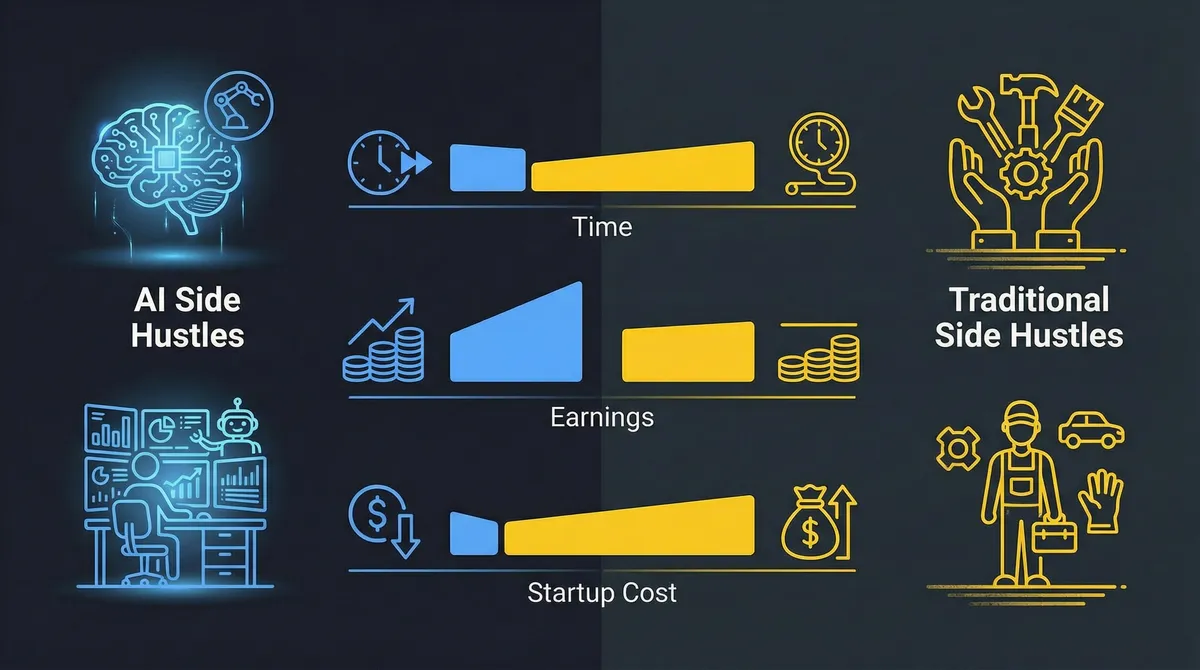
Comparison Table: AI Side Hustles vs Traditional Side Hustles
Feature | AI Side Hustles | Traditional Side Hustles |
|---|---|---|
Startup cost | Low (AI tools + laptop) | Varies; often higher for physical gigs |
Time flexibility | High; mostly online and async | Medium; often schedule-based |
Income potential | Medium to high with systems | Medium; limited by physical availability |
Skill requirements | Digital skills + willingness to learn AI | Practical or local skills |
Scalability | High; can add clients or products fast | Limited; tied to your personal time |
Common Mistakes to Avoid
Mistake #1: Chasing every AI trend at once
❌ What people do wrong: They jump from one AI side hustle idea to another every week—YouTube faceless channels, then low-content books, then AI art posters—without giving any approach enough time to work. This constant switching makes it impossible to build a portfolio, learn a niche, or get referrals.
✅ What to do instead: Pick one AI side hustle for at least 8–12 weeks. During that time, focus on improving your offer, portfolio, and outreach rather than switching tactics. You can add more side hustles later, but your first wins usually come from focus and persistence, not endless experimentation.
Mistake #2: Relying 100% on raw AI output
❌ What people do wrong: They paste client prompts into AI tools and send whatever comes out, without editing, fact-checking, or tailoring to brand voice. Over time, clients notice that the content feels generic or inaccurate, and they stop renewing contracts.
✅ What to do instead: Treat AI as a drafting assistant, not a full replacement. Always review for accuracy, structure, tone, and originality. Use your client’s past content as a reference so outputs feel consistent with their brand. Surveys of creators and marketers show that AI works best when humans stay in the loop as editors and decision-makers.
Mistake #3: Ignoring legal and platform rules
❌ What people do wrong: They copy other people’s content or styles too closely, ignore copyright when using references, or flood platforms with repetitive posts and videos. Sometimes they also hide their use of AI when platforms or clients have clear guidelines. This can lead to bans, takedowns, or damaged trust.
✅ What to do instead: Read the terms for the platforms you use and follow copyright rules. Use AI tools that offer clear licensing options. When in doubt, be honest with clients about how you use AI, and highlight how you still add human judgment and customization on top. Playing the long game means protecting your reputation and your accounts.
Summary & FAQ
Final Verdict
AI side hustles are no longer a niche experiment; they are becoming a normal way for people to earn extra income using tools they already touch at work. Surveys show that most freelancers and many employees now use generative AI, and many of them report stable or rising earnings as they learn to work with these tools.
If you treat AI side hustles as a serious craft—choosing a real niche, designing clear offers, and building client relationships—they can grow from a few hundred dollars to a meaningful part of your monthly income. The key is to avoid hype, stay ethical, and keep improving your systems as tools and markets change.
What AI side hustle do you feel most excited to try first, and what is one concrete step you can take this week to move from “research” to action?
Frequently Asked Questions
Q: What are AI side hustles, and how do they work?
AI side hustles are income streams where you use tools like ChatGPT, generative image apps, and AI video tools to provide services, create products, or produce content for pay. You still bring ideas, strategy, and quality control, while AI speeds up tasks such as drafting, editing, or design. Most people start small with one offer, then refine their process as they learn.
Q: Can I really make money with AI side hustles in 2026?
Yes, you can genuinely make money with AI side hustles, but it requires real work and consistent effort. Guides and surveys show that people earn anywhere from a few hundred dollars per month selling prompts or content to several thousand via freelancing and digital products. Your results depend on your niche, your offer, and how well you market yourself.
Q: Do I need coding skills to start an AI side hustle?
You do not need coding skills for most AI side hustles. Many of the best opportunities use no-code tools and simple workflows such as writing, design, video, research, or customer support. What you do need is curiosity, a willingness to learn the tools, and some basic business skills such as communication and time management.
Q: How much can I realistically earn from AI side hustles?
Realistic earnings range from $200–$500 per month for a small, casual effort up to $2,000–$5,000+ per month for people who treat their AI side hustles like real businesses. Most creators and freelancers who reach higher income levels do it by specializing in a niche, building recurring clients, and improving their systems over time rather than chasing quick wins.
Q: What is the best AI side hustle for beginners?
The best AI side hustle for beginners is usually something simple and low-cost, such as AI-assisted content writing, template creation, or thumbnail and design services. These models have clear demand, easy-to-learn tools, and plenty of examples to study. Start where your existing skills overlap with a real need, then add AI as your helper rather than trying to learn everything from scratch.
Never Miss an Update
Join thousands of readers getting the latest insights on technology, business, and digital marketing.